
'NO BIGGER THRILL'
A cut chapter from The Fort Bragg Cartel on the secret history of drug trafficking in the American military

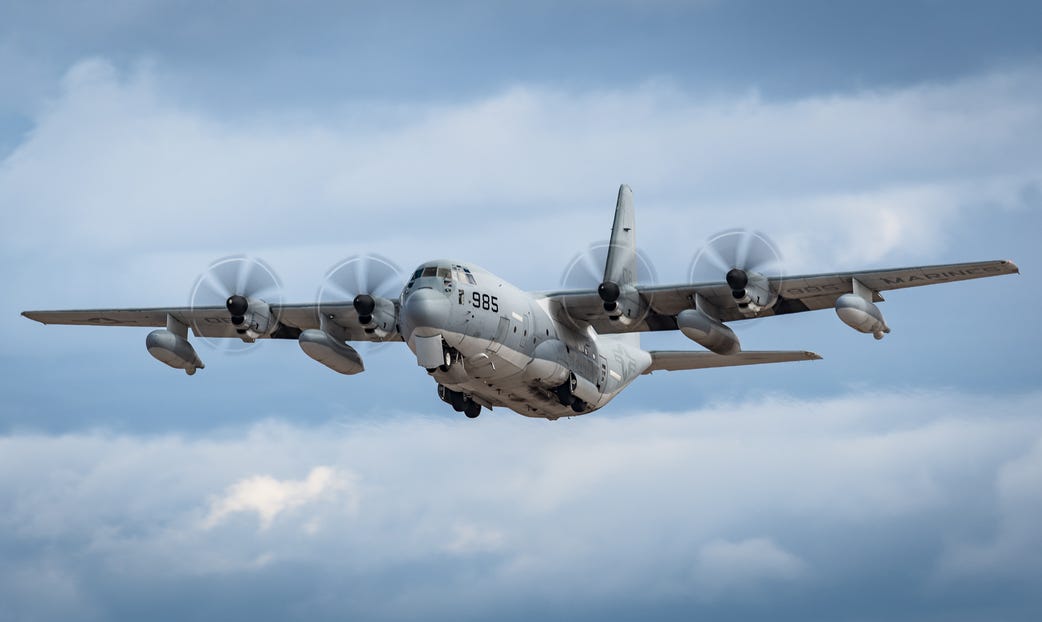
PHOTO: A Lockheed Martin C-130 Hercules. During the Terror Wars, some American soldiers used such transport planes to smuggle cocaine and heroin into the United States on routine flights home from Colombia and Afghanistan.
NOTE TO READERS: The material below, on various cases of American soldiers convicted of drug trafficking between 2005 and 2018, originally comprised the third chapter of an early draft of The Fort Bragg Cartel, and was cut to streamline the story and move more quickly into events of the 2020s.
Instances of American soldiers trafficking drugs, while not typically represented in fictional depictions of the drug war on television and in film, are not half as aberrational as many in the United States might think. Just as we complacently prefer to conceive of Mexican officials as the corrupt ones, while turning a blind eye to how easily bribed our own border guards are, Americans have a hard time imagining the US military as pervaded by international smuggling plots, despite plenty of evidence to suggest that this form of criminal activity has been steadily on the rise in the armed forces since 2001, picked up speed around 2012, and really accelerated after about 2016, especially among special operations troops.
Many soldiers, sailors, airmen, and marines who use their connections to outposts of American military power like Colombia and Thailand to move narcotics stateside are smart about it and don’t get caught. In other cases, the authorities deal with perpetrators discreetly, meting out administrative punishments such as separation in lieu of prosecution, or convening courts martial that are kept quiet and never publicized. The fourth and presumably smallest category of cases are those in which service members are criminally prosecuted in trials that are reported in the press, leaving a record in the news archives that researchers can analyze. Even looking solely at this tip of the iceberg, it’s apparent that the US military has a growing problem.
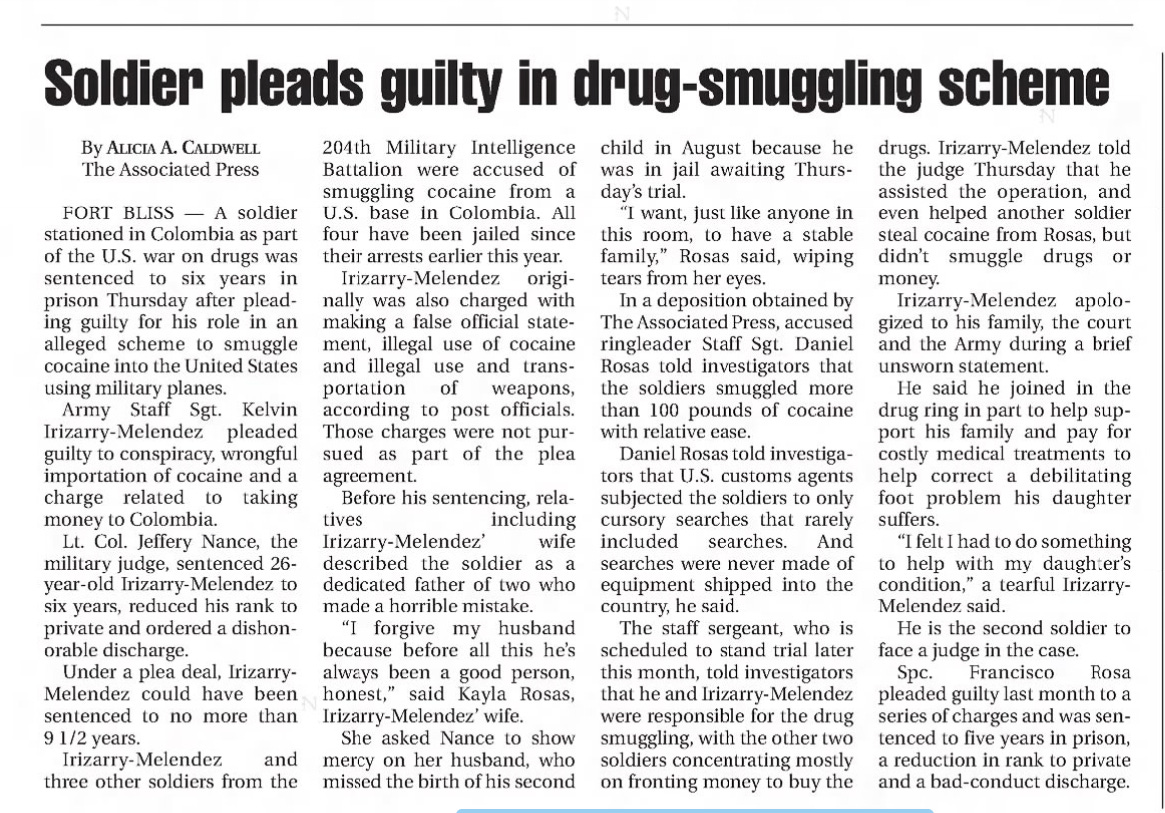
A 2005 case provides an early example. Four American soldiers, military intelligence specialists assigned to Joint Task Force Omega, a jungle-fighting division of the Colombian army, for years smuggled million-dollar quantities of cocaine aboard military planes to points all across the southern United States, including Texas and Florida. Once the conspiracy was exposed, Colombian officials insisted on their sovereign right to prosecute the corrupt American soldiers, just as many Colombians had been extradited, over the years, to face trafficking charges in harshly punitive American courts, but of course that didn’t happen. The soldiers, specialists in aerial reconnaissance and surveillance, based out of Fort Bliss, Texas, were whisked back to the United States and tried in federal court. All but the ringleader were given relatively light, single-digit prison sentences, and the whole episode barely made a blip in the national media, which at the time was fixated on the war in Iraq and hardly noticed that President George W. Bush was following in his father’s footsteps by massively escalating the drug war in Latin America.
Keep reading with a 7-day free trial
Subscribe to DENIED AREAS by Seth Harp to keep reading this post and get 7 days of free access to the full post archives.